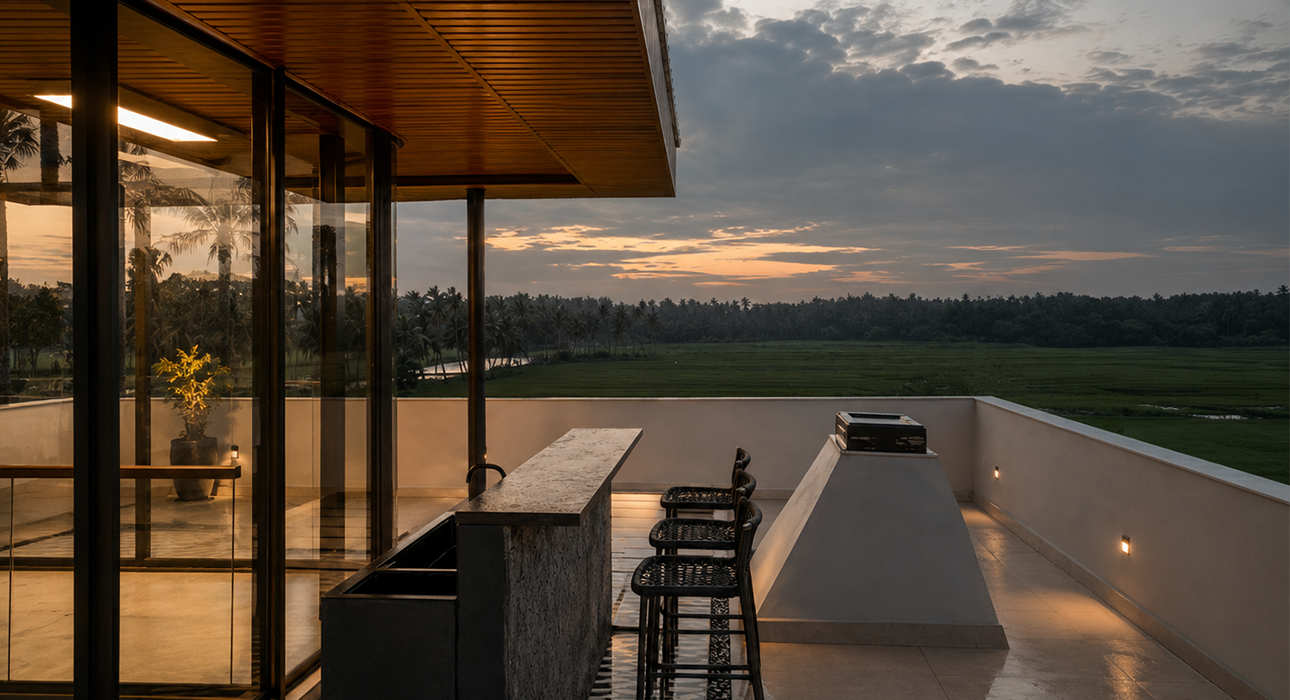
Buying a villa in Goa can begin with something as simple as a photograph you like. The architecture catches your eye, the setting feels right, and suddenly you are imagining weekends, long stays, family gatherings or a different pace of life. But a luxury villa in Goa is a significant purchase. The photographs are only the beginning.
Before committing to a property, a buyer needs to look at the land, the location, the legal documentation, the architecture, the construction, the developer, the ongoing costs and, importantly, how the home will actually work over time. This villa buying checklist in Goa is designed to help you do exactly that. It is not a substitute for independent legal, financial or technical advice. Instead, think of it as a framework for the questions worth asking before you buy.
Start With the Land, Not the Villa
- Who owns the land?
- What is the ownership history?
- Is the title clear and marketable?
- Are there any known encumbrances or disputes?
- Does the seller or developer have the legal right to sell the property?
- Do the survey records correspond with the property being offered?
- Are the boundaries clearly established?
- Is the intended use of the land legally permissible?
Verify the Approvals and Regulatory Position
The next question is whether the villa and the development have the approvals required
for their particular status and location.
Depending on the property and stage of development, the documentation you may
need to review can include:
- Approved plans
- Development permissions
- Construction permissions
- Applicable land-use or conversion documentation
- Project approvals
- Goa RERA registration, where applicable
- Completion documentation
- Occupancy documentation for completed properties
- Utility and infrastructure documentation
Goa RERA provides a public portal where prospective buyers can search registered
projects and agents. The authority also sets out the circumstances in which real estate
projects require registration and the relevant exemptions.
For an under-construction or new development, do not assume that a brochure tells you
everything you need to know.
Ask to see the current documentation.
For a completed villa, ask what has been completed, what has been approved and what
documentation will be handed over to you.
A good villa buying checklist should therefore include a simple rule:
Do not rely on a promise when a document can answer the question.
Understand the Exact Property You Are Buying
Luxury homes are often presented through large photographs, masterplans and
carefully composed floor plans.
Look closer.
Ask the developer or seller to clearly explain:
- Plot or land area
- Built-up area
- Carpet or usable area, where relevant
- Number of bedrooms
- Private outdoor areas
- Pool area, if applicable
- Parking
- Storage
- Common areas
- Exclusive-use areas
- Shared facilities
- What is included in the quoted price
- What is excluded
This matters particularly when comparing luxury villas for sale in Goa.
Two properties can appear similar in headline size while offering very different amounts of usable space, privacy and outdoor living.
The question is not simply, “How large is the villa?”
It is:
How much of what I am paying for will meaningfully improve the way I live?
Visit the Property More Than Once
Professional photography is useful. It is not enough.
If possible, visit the property at different times of day.
Look at:
- Morning and afternoon light
- Natural ventilation
- Noise
- Neighbouring properties
- Privacy
- Road access
- Drainage
- Water flow during or after rain
- Approach roads
- Surrounding construction
- Nearby activity
- The relationship between indoor and outdoor spaces
For an upcoming villa project in Goa, also visit the actual site rather than evaluating only renders.
A computer-generated image can communicate design intent. It cannot tell you how the land feels under your feet, how the road approaches the site or how neighbouring properties affect privacy.
Look at How the Villa Responds to Goa's Climate
A villa in Goa has to work in Goa.
That sounds obvious, but it is an important distinction when evaluating luxury villa architecture in Goa.
The climate places real demands on a home: heat, humidity, heavy monsoons, intense sunlight and, in some locations, exposure to coastal air.
Look for evidence that the architecture has considered:
- Cross ventilation
- Natural light
- Solar exposure
- Shading
- Roof design
- Rainwater management
- Waterproofing
- Drainage
- Material durability
- Air movement
- Indoor-outdoor transitions
Good modern tropical architecture in Goa is not simply a visual style.
It is architecture that responds intelligently to its environment.
This is also why a buyer should ask why a particular design decision was made rather than simply whether it looks good.
Inspect Construction Quality, Not Just Interior Finishes
One of the easiest mistakes when buying a luxury villa is to judge quality through visible finishes alone.
A beautiful kitchen, stone surface or bathroom fitting can create a strong first impression.
But the less visible elements can matter more over the life of the home.
When possible, understand the approach to:
- Structural construction
- Waterproofing
- Drainage
- Roofing
- Electrical systems
- Plumbing
- Waterproofing around wet areas
- Pool construction
- Windows and glazing
- External finishes
- Stone and flooring
- Joinery
- Landscape infrastructure
- Backup systems
- Maintenance access
Ask what materials are being used and why.
Ask where they come from.
Ask whether they are selected primarily for appearance, or because they are appropriate for the environment and expected to perform over time.
For buyers evaluating high quality villa construction, this distinction is important.
Luxury should not disappear behind the surface.
Pay Attention to Materials
Materials influence how a home looks when it is new.
More importantly, they influence how it feels and performs years later.
When assessing a luxury villa in Goa, ask:
What is this material?
Where did it come from?
Why was it selected?
How does it perform in Goa’s climate?
How will it age?
How difficult will it be to maintain or replace?
This level of questioning can reveal a great deal about a developer’s philosophy.
Risaia, for example, describes its approach in terms of quality, longevity and comfort, with attention to materials, craftsmanship and detail rather than aesthetics alone. Its current website specifically discusses premium natural stone, high-performance glazing, refined finishes, pool materials and hand-finished pavers.
The broader lesson for a buyer is simple:
Do not ask only what looks expensive. Ask what is built to last.
Understand the Developer's Role
When buying a newly built or under-construction home, you are not only buying a villa.
You are also placing a degree of trust in the developer.
So research the developer carefully.
Look at:
- Current projects
- Completed projects
- Design philosophy
- Architects and consultants
- Construction approach
- Materials
- Documentation
- Communication
- Delivery process
- After-sales support
- Property maintenance arrangements
If you are comparing villa developers in Goa, avoid reducing the decision to a brand
name exercise.
A familiar name can be useful, but it does not remove the need for property-level due diligence.
Likewise, if a developer is relatively new, the absence of a decades-long history should not automatically end the conversation.
Look at what exists today.
Look at the quality of the work being created.
Look at the thinking behind the project.
Look at the people responsible for delivering it.
Current evidence matters.
Understand the Community, Not Just Your Villa
A private home is still affected by what surrounds it.
If you are considering a villa within a community or enclave, understand:
- Number of homes
- Spacing between villas
- Privacy
- Common facilities
- Common areas
- Access roads
- Security
- Landscape maintenance
- Waste management
- Water arrangements
- Power backup
- Maintenance responsibilities
- Future development within or around the property
A villa community in North Goa can offer advantages, but the experience depends greatly on how the community has been planned and how it will be maintained.
Ask to see the masterplan.
Then ask a more important question:
What will this place feel like when every home is occupied?
Understand What Happens After You Buy
A second home is rarely a “buy it and forget it” property.
The realities of villa maintenance in Goa should be understood before purchase.
Ask about:
- Pool maintenance
- Landscape maintenance
- Housekeeping
- Security
- Preventive maintenance
- Pest control
- Repairs
- Utilities
- Property inspections
- Monsoon preparation
- Air-conditioning servicing
- Equipment servicing
- Emergency support
If you live outside Goa, ask how the property will be looked after when you are away.
This is especially important for NRIs and buyers who intend to use their villa only periodically.
The cost of ownership is not limited to the purchase price. It is useful to understand the ongoing operating model before you buy rather than after you take possession.
Read the Agreement as Carefully as the Brochure
The brochure tells you how the property is presented.
The agreement tells you what you are actually agreeing to.
Have an independent legal professional review the relevant documents and understand:
- Payment schedule
- Construction milestones
- Possession terms
- Specifications
- Inclusions and exclusions
- Changes to plans
- Cancellation provisions
- Delay provisions
- Maintenance responsibilities
- Common-area obligations
- Defect or warranty provisions
- Handover documentation
Do not assume that something shown in a visual presentation automatically forms part of your contractual entitlement.
If it matters to you, understand where it appears in the documentation.
Ask What Happens If Something Changes
This is one of the most useful questions a buyer can ask.
What happens if:
- Construction takes longer than expected?
- A specified material changes?
- The final landscape differs from the initial plan?
- A common facility changes?
- You want a modification?
- You identify a defect after possession?
- You are buying while construction is still underway?
The answers can tell you a great deal about how a developer operates.
A transparent developer should be able to explain its process clearly.
For registered projects, Goa RERA also provides a regulatory framework around project disclosures and buyer rights. Buyers should review the specific project documentation and obtain independent advice on how the applicable provisions relate to their
purchase.
The Practical Villa Buying Checklist
Before making a decision on a luxury villa for sale in Goa, work through these questions:
Land & Legal
- Is the title clear?
- Has the ownership history been independently reviewed?
- Have encumbrances and disputes been checked?
- Do survey records and property boundaries correspond?
- Is the intended use legally permissible?
- Have all relevant approvals been verified?
- Is Goa RERA registration applicable, and if so, has it been checked?
Property
- Do I understand the actual land and built-up areas?
- What exactly is included in the purchase?
- What is shared and what is private?
- Are the plans and specifications clear?
Architecture & Construction
- Does the design respond to Goa’s climate?
- Is ventilation considered?
- Is there adequate shading?
- How is rainwater managed?
- What waterproofing systems are used?
- What construction materials have been specified?
- What is the approach to long-term maintenance?
Location
- Does the neighbourhood suit the way I intend to live?
- Is access convenient?
- What is happening around the property?
- Could surrounding development affect privacy or views?
- Does the location work for my family throughout the year?
Developer
- Who is actually building the property?
- What can I see of their current work?
- Who are the architects and consultants?
- How transparent are they with documentation?
- What happens after possession?
- Who handles maintenance?
Financial
- What is the complete acquisition cost?
- What additional transaction costs apply?
- What are the recurring maintenance costs?
- Are there community or common-area charges?
- What will it cost to maintain the property when I am away?
Contract
- Has my own lawyer reviewed the agreement?
- Are specifications clearly documented?
- Are timelines and payment milestones clear?
- Are possession and handover terms clear?
- Do I understand the provisions relating to changes, defects and delays?
The Most Important Question: Does the Home Make Sense Beyond the First Visit?
A villa can impress you in ten minutes.
A good home should make sense after ten years.
That means looking beyond the photograph, the furniture, the landscaping and even the initial emotional reaction.
Look at the land.
Look at the architecture.
Look at the materials.
Look at the construction. Look at the paperwork. Look at the developer. Look at the neighbourhood. And then think about how you will actually live there. This is particularly important in North Goa, where buyers today have a growing choice of new villas and residential developments. The right property is not necessarily the one with the longest list of features. It is the one where the location, land, architecture, construction, ownership structure and your own way of living make sense together. The best luxury homes in Goa should reward closer inspection. The details should become more convincing, not less, once you start asking questions. That is ultimately what due diligence is for. Not to take the emotion out of buying a home. But to make sure the emotion is supported by something solid.
FAQs
Start with the land title and legal documentation, then verify applicable approvals, the
exact property being sold, construction quality, location, developer credentials,
ownership costs and the sale agreement. Independent legal and technical advice is
strongly recommended.
Buyers should independently verify title, ownership history, encumbrances, survey
details, applicable land-use and development permissions, project approvals and Goa
RERA status where applicable. The exact documents required depend on the property
and transaction.
Look at the developer’s current and completed work, construction approach, design
philosophy, documentation, consultants, materials, communication process and after
sales support. For an under-construction property, pay particular attention to what is
documented rather than relying only on projected outcomes.
Look beyond visible finishes. Ask about structure, waterproofing, drainage, roofing,
plumbing, electrical systems, glazing, pool construction, external finishes and the
materials used throughout the property
Yes. Photographs and plans cannot replace an in-person assessment. If possible, visit
more than once and observe light, ventilation, noise, access, privacy, drainage and the
surrounding environment at different times.
Ask about title, approvals, specifications, construction quality, materials, timelines,
payment milestones, maintenance, handover, defect resolution and what happens if
plans or specifications change.
Yes. With an under-construction property, you are assessing both the property and the
developer’s ability to deliver it. With a completed villa, you can physically inspect the
finished home and verify relevant completion and occupancy documentation.
Very important. Goa’s climate means that landscaping, waterproofing, drainage, pools,
external finishes and equipment require ongoing attention. Buyers should understand
the maintenance model and expected costs before purchasing.